

Here is an uncomfortable truth.
Most houses in Pakistan do not develop cracks, seepage and sinking floors because of bad luck.
They develop them because of a handful of mistakes made in the first few weeks of construction.
We know, because we get called in to fix them.
In this guide, we will walk you through the 8 house construction mistakes Pakistan homeowners repeat again and again.
For each mistake, you will see what actually goes wrong, what it costs you later, and the simple fix that prevents it.
Read it before you pour a single footing. It will save you money. A lot of it.
Building soon? Start with a free pre-design consultation and an itemized quote for your plot. No obligation, just clear numbers before you commit.
This is the most common mistake on this list.
A homeowner finds a beautiful house photo online. The contractor nods and says, no problem, we will build exactly this.
Except there are no drawings. No dimensions. No structure calculations.
So the team improvises. Columns land where they fit. Beams get sized by guesswork. The staircase steals space from the bedroom.
By the time the roof is cast, the house looks like the photo from the street and like a compromise everywhere else.
The fix is boring, and it works. Get a proper architecture design first: floor plans, elevations and working drawings made for your plot, your soil and your family.
A design costs a small fraction of the build. Redesigning a cast slab costs a fortune.
Everyone wants the best house construction companies in Lahore. Then most people hire the cheapest quote instead.
See the problem?
A rate that looks 15 percent cheaper usually is cheaper for a reason. Thinner steel. A leaner concrete mix. A lower brick grade. Items quietly missing from the scope.
You do not see the saving. You see the cracks, two years later.
Here is what to do instead.
Compare quotes item by item, not rate by rate. Ask which steel brand is included. Ask what concrete ratio is priced. Ask what is excluded.
If a contractor cannot explain his own bill of quantities, that tells you everything.
The cheapest quote is rarely the cheapest house.
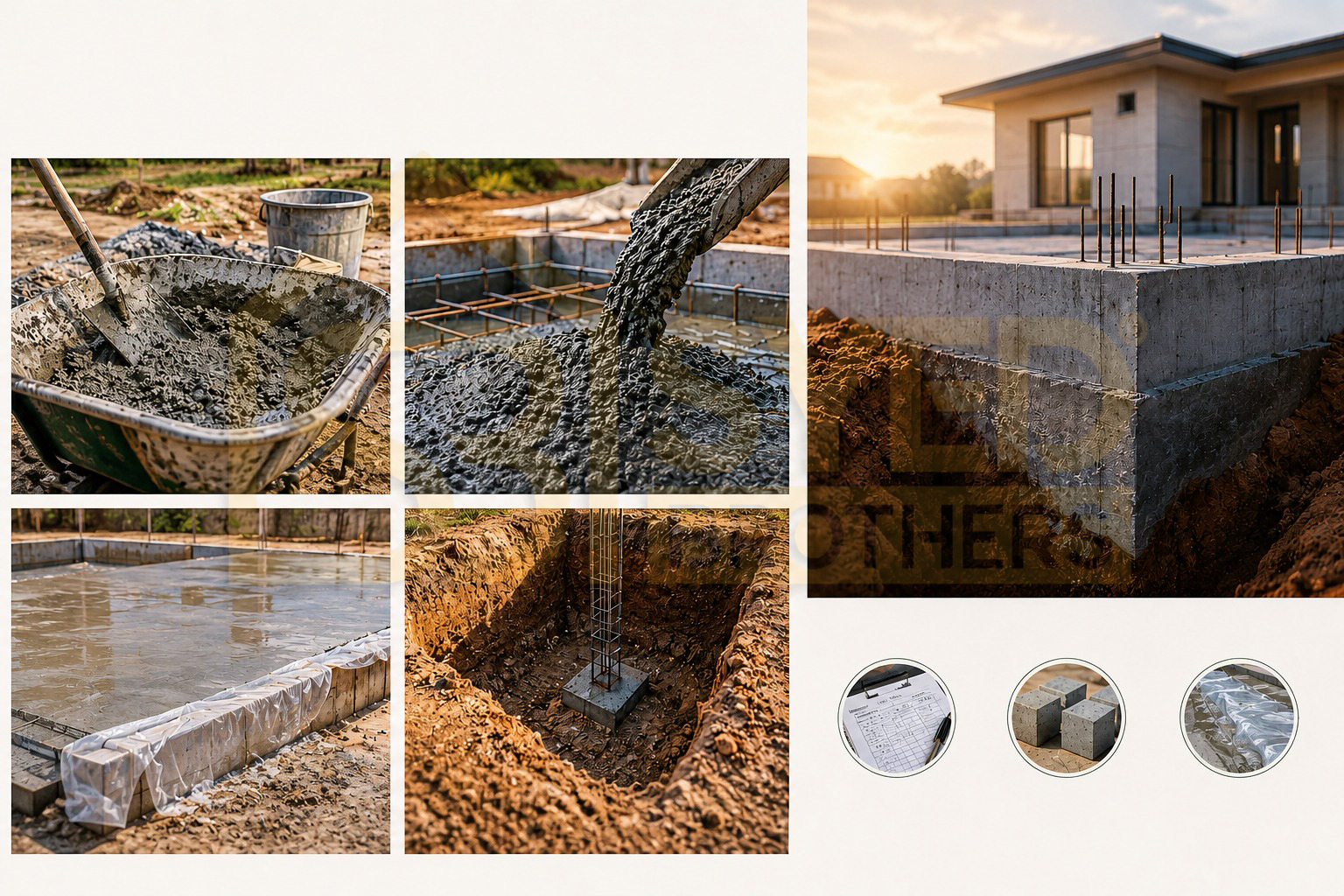
Your foundation is the one part of the house you can never repair properly.
So why do common foundation pouring mistakes keep happening on site after site?
The usual list is short. Concrete mixed by eye instead of by ratio. Too much water added to make pouring easier. No curing, or curing stopped after two days. Footings poured before anyone checked the soil at the bottom of the pit.
Each one weakens the base your entire house stands on.
Think of it like this. A foundation is a promise the house makes to the ground. Break the mix or skip the curing, and the house breaks that promise, slowly, with settlement cracks.
The fix? Ratios in writing. Cube tests where the project justifies them. Curing for the full period, supervised.
It is not glamorous work. It is the work that matters most.
This mistake costs almost nothing to avoid. And a fortune to fix.
Termite proofing for the foundation in Pakistan means treating the soil before the floors are laid, and treating the woodwork zones as the build rises.
Skip it, and termites move in rent free. They eat door frames, wardrobes and wooden flooring from the inside, and you usually discover them when the damage is already done.
Post-construction treatment exists, but it means drilling into finished floors and repeating treatments. Prevention at foundation stage is one small line in the budget.
One line. That is it.
Put it in the contract. Verify the chemical and the coverage on site. Move on with your life.
The grey structure is your house's skeleton. Errors here hide under plaster for a year, then introduce themselves as cracks.
The grey structure construction errors we see most often are these:
This is exactly where in-house structural engineering pays for itself. Someone qualified checks the steel before every pour, because after the pour, nobody can check anything.
Simple rule: if nobody inspected it before the concrete, assume it needs a second look.
Ask any homeowner in Pakistan about their biggest complaint in a new house.
Seepage. Every single time.
Damp patches on walls. Paint bubbling. That smell in the ground floor bedroom during monsoon.
Almost all of it traces back to waterproofing that was skipped or rushed: no damp proof course, bare bathroom floors, an untreated roof.
So, how to prevent seepage in a 5 marla house, or any house? Do these four things during construction, not after:
Waterproofing during construction is cheap. Chasing seepage through finished paint and tiles is not.
Here is how most budgets die.
Someone multiplies the covered area by a rate a friend mentioned, and calls it the budget.
Then reality arrives. The rate did not include the boundary wall. Or the tanks. Or the finishing grade the family actually wants.
Speaking of finishing: get clarity on A+ category construction rates in 2026 before you fall in love with imported sanitary and Italian tiles. Premium finishing is priced item by item, and it can rival the structure bill.
The professional way is a bill of quantities. Every item, every brand, every rate, added up in front of you.
Boring? Yes. Accurate? Also yes.
And if you are comparing builders for house construction in Lahore, this is your test: the one who shows his working is the one who is not hiding anything.
We get it. You want control. You want to save the contractor's margin.
So you hire labour, buy material yourself, and supervise between office hours.
Then material arrives late. The mason leaves for another site. Steel gets bought twice because nobody tracked the first delivery. The margin you saved is spent, with interest, on delays and rework.
There is a reason busy owners, especially overseas Pakistanis, hire a turnkey construction contractor in Islamabad, Lahore and every other major city: one contract, one team, one throat to choke, as the saying goes.
A good turnkey construction arrangement puts design, approvals, material and labour under one accountable team, with milestone payments you verify as work completes. Our construction in Islamabad and Lahore teams both work this way.
Your time has a price too. Spend it checking milestones, not chasing cement deliveries.
Why do newly built houses in Pakistan get wall cracks?
Usually for three reasons. The structure moved slightly as it settled, often because of foundation or curing shortcuts. The masonry and plaster dried too fast without proper curing. Or steel inside the concrete was placed badly and the section cracked under load.
Hairline plaster cracks in the first season can be cosmetic. Wide, growing or diagonal cracks deserve a structural inspection, not another coat of paint.
How do you calculate grey structure cost for a 10 marla house?
Here is how to calculate grey structure cost for 10 marla plots, the simple way:
Step 1: Find your total covered area from the drawings, all floors added together
Step 2: Multiply the covered area by the quoted grey structure rate per square foot
Step 3: Add the fixed items the rate often excludes, like tanks, sewerage and the boundary wall
Step 4: Compare two quotes only when their specifications match, steel brand, concrete ratio and scope
Want us to run the numbers on your actual drawings? That is free, and it takes the guesswork out.
Let us recap the 8 mistakes:
Notice the pattern? Every mistake on this list is cheapest to fix before it happens, and most expensive after the concrete has set.
If you are planning a build, start the right way. Contact Syed Brothers for a free consultation and an itemized quote, and let us help you skip all eight.
Which of these mistakes worries you most about your own project?
Finishing (Interiors & Exteriors). Syed Brothers Designers & Builders, as the best construction company in Pakistan..
Copyright © 2026 Syed Brothers | All Rights Reserved
Leave Comments